
Flat Roofing Dublin — Installed and Repaired Properly, Guaranteed
Why Flat Roofs Fail Differently to Pitched Roofs
A flat roof isn't actually flat — every properly built one has a slight built-in slope called the fall, designed to move rainwater toward an outlet or edge rather than let it sit.
That distinction matters more than most people realise, because almost every flat roof problem traces back to water either finding a gap it shouldn't, or having nowhere to go once it's up there.
Where a pitched slate roof relies on overlap and gravity to shed water fast, a flat roof relies on a continuous waterproof membrane doing all the work across its whole surface, with the fall giving that water somewhere to actually drain to.
That's a completely different set of failure points — flat roofs don't fail slate by slate, they fail at joints, upstands, and low points where the fall has settled or the membrane has been breached.
Fully Insured, No Call-Out Fees, Fast Response
Types of Flat Roofing We Work With
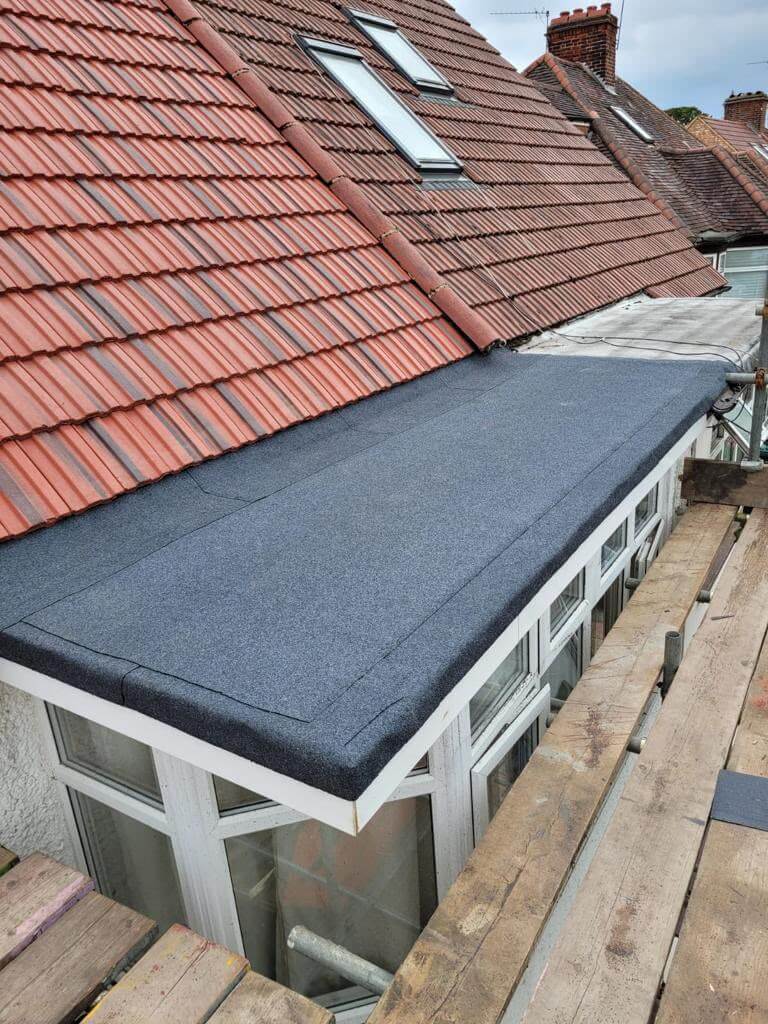
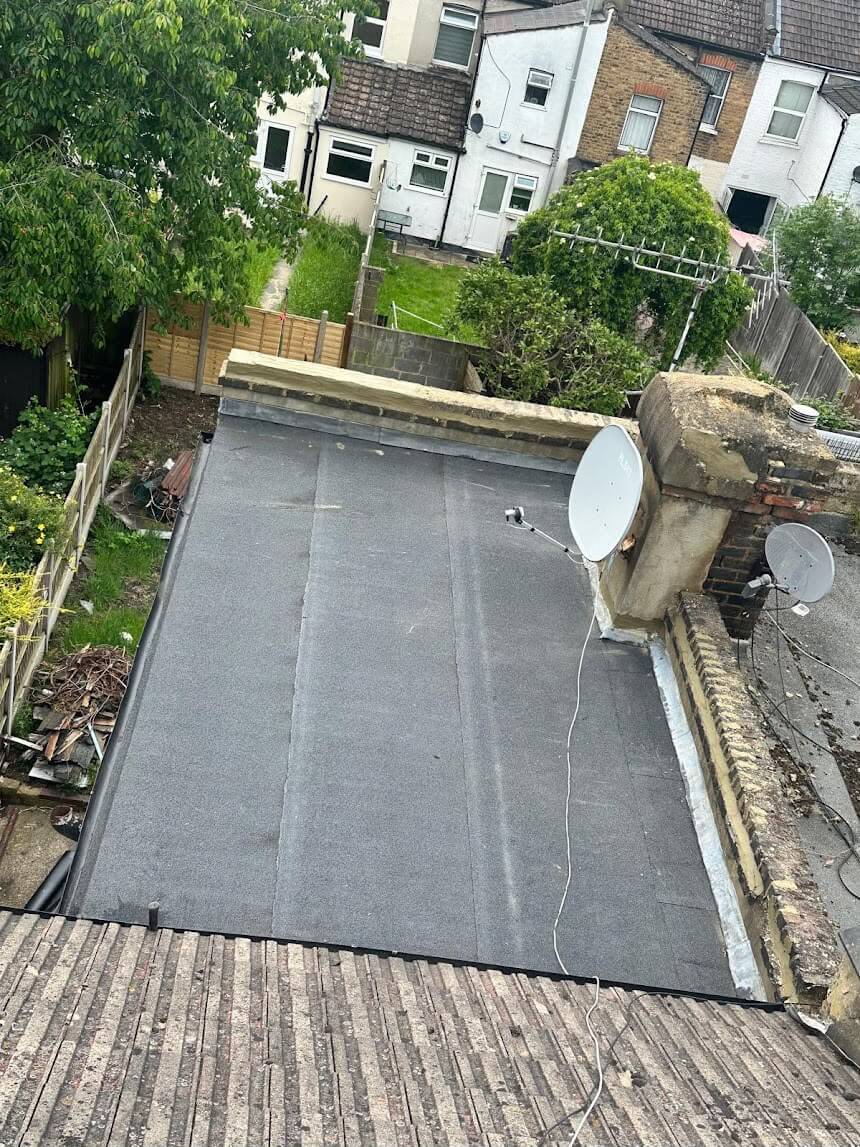
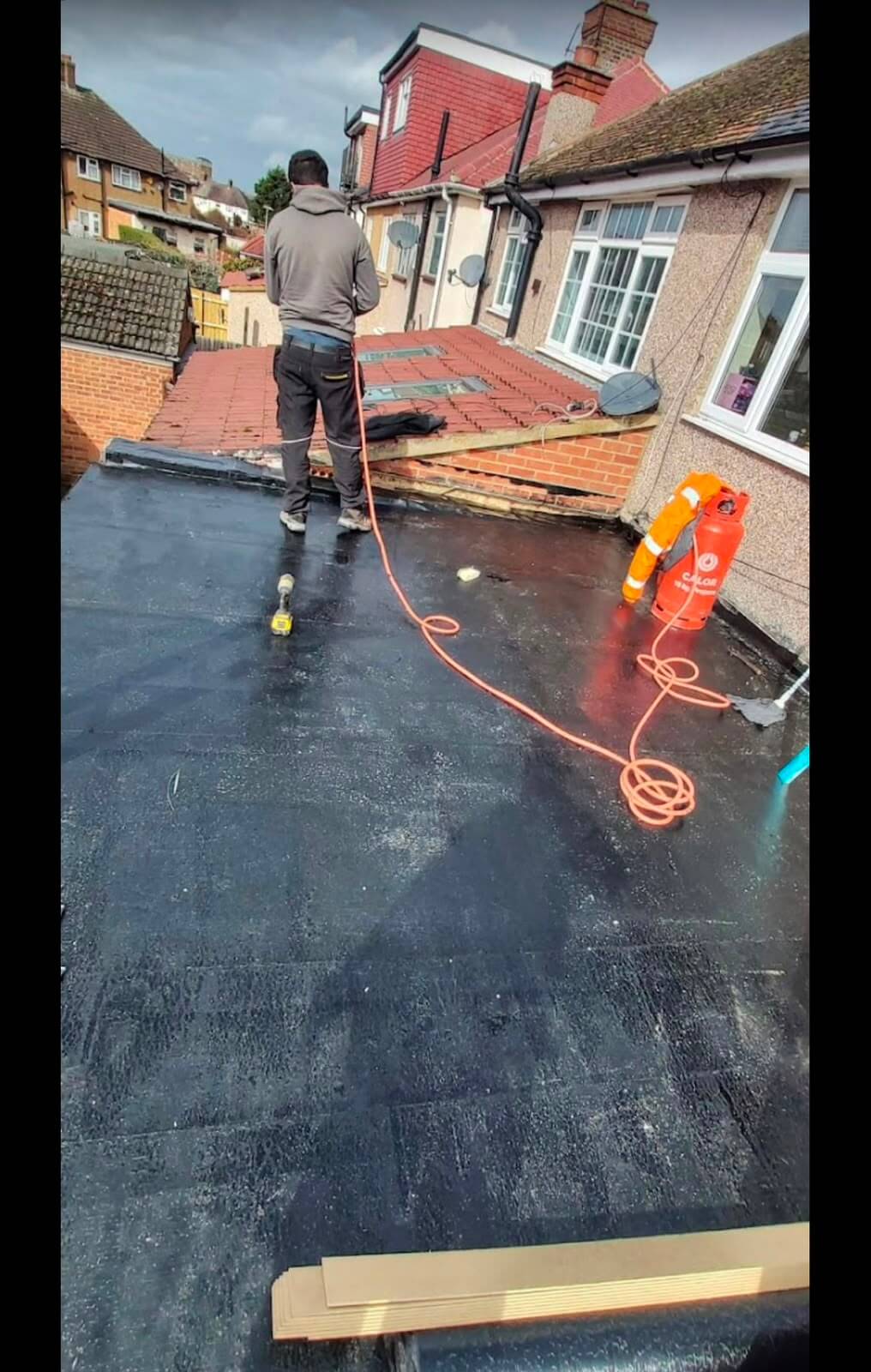
Torch-on Felt (Bitumen Felt) is still the most common flat roof system on Dublin extensions, garages, and dormers built over the last few decades. Multiple layers of bitumen felt are heat-welded together to form a continuous waterproof surface, with particular attention paid to the joints and upstand edges, which is where the vast majority of felt roof leaks actually originate rather than the main flat area itself.
Single-Ply Membrane systems (such as EPDM rubber) are a more modern alternative, typically supplied as a single large sheet rather than multiple welded layers, which reduces the number of joints and therefore the number of potential leak points. It's often the better option on larger flat roof areas where minimising joints genuinely matters, though it comes at a higher material cost than standard felt.
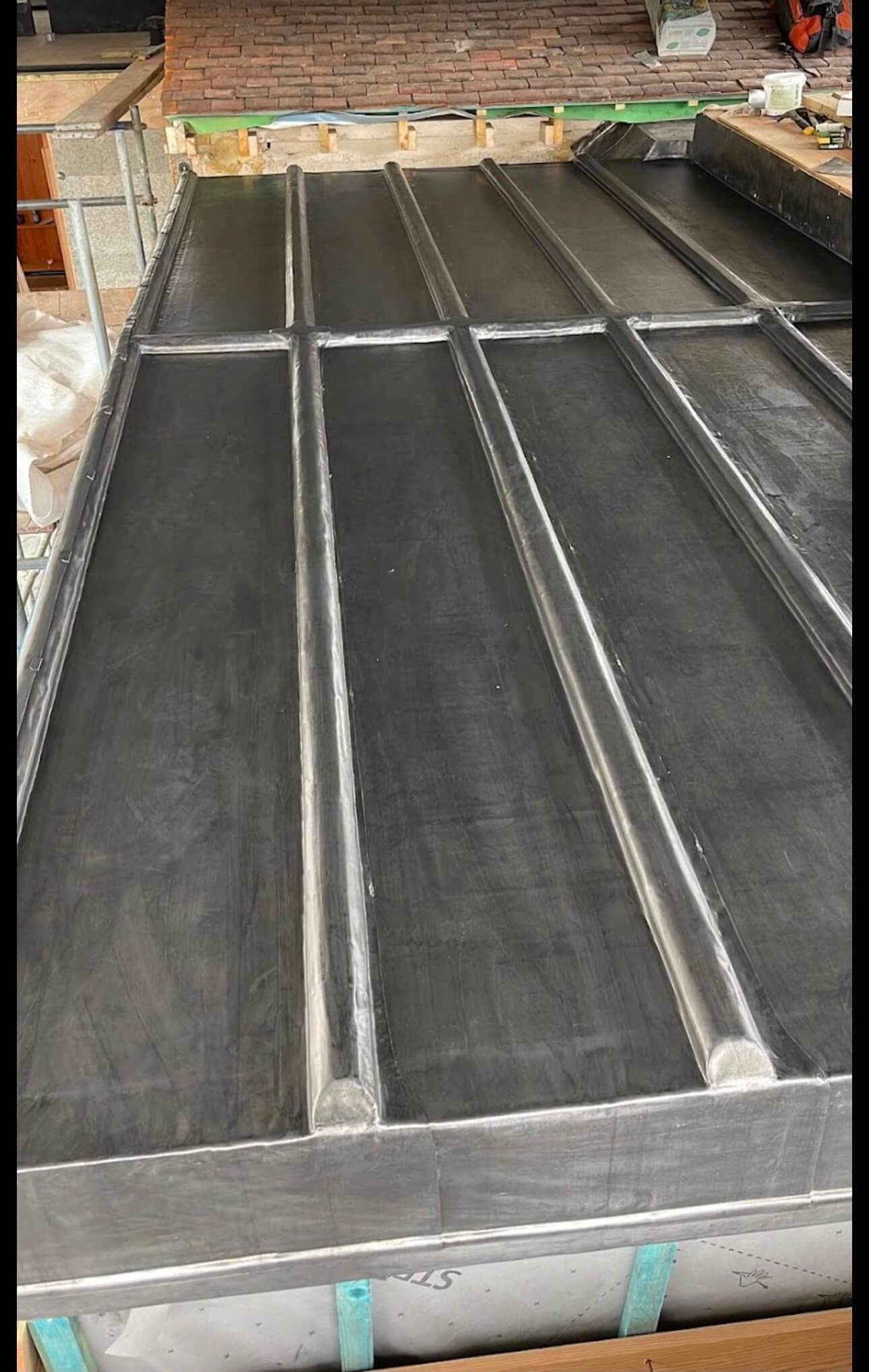
GRP (Fibreglass) Roofing forms a rigid, seamless waterproof layer once cured, and it's a strong option where a completely joint-free surface is the priority — but it needs to be laid in the right conditions and by someone experienced with the material, since a poorly mixed or applied GRP system can fail in ways that are harder to spot and harder to patch than a felt roof.
We'll recommend the system that actually suits your roof, access, and budget rather than defaulting to whichever one we happen to have on the van that day.

Recent Work We Done In Dublin
Signs Your Flat Roof Needs Attention
Standing water more than two days after rain is the clearest practical sign something's wrong with drainage, and it's worth checking after the next dry spell rather than assuming it'll eventually clear on its own.
A soft, spongy feel underfoot when walking near the roof edge (for accessible flat roofs) often means moisture has already got into the deck beneath the membrane, even before any visible leak shows up inside the building below.
Visible cracking, blistering, or a membrane that's gone brittle and grey rather than smooth are all signs of a covering nearing the end of its service life, and catching it at this stage is significantly cheaper than waiting for an active leak to force the issue.
Why Flat Roofs Actually Leak
Failed or ageing upstands — the vertical sections where the flat roof meets a wall, parapet, or another roof section — are the single most common source of flat roof leaks, and they're often overlooked because attention naturally goes to the large flat area rather than the edges. An upstand that's lifted, cracked, or simply reached the end of its material life will let water track down inside a wall cavity long before there's any obvious sign on the flat surface itself.
A settled or incorrect fall means water has nowhere to properly drain, and it collects instead of running off. Standing water that doesn't clear within 48 hours of rain is one of the clearest signs the fall has failed, either because the roof structure has settled unevenly over time or because it was never built with enough fall to begin with — a mistake that's more common than it should be on extensions built to a tight budget.
Blistering, where trapped moisture or air under the felt expands and pushes up a bubble in the surface, usually points to a problem during the original installation — either moisture trapped underneath before the felt was laid, or poor adhesion between layers. Left alone, a blister eventually splits and becomes an active leak point rather than staying a cosmetic issue.
Perishing or UV-damaged membrane happens over years of direct sun exposure, particularly on south-facing flat roofs, where the material becomes brittle and starts to crack rather than flex. It's a slow, predictable failure that's far cheaper to address with a resurfacing or overlay before it splits than after.
Frequently Asked Roofing Questions
How long does a flat roof actually last before it needs replacing?
It depends heavily on the material and how well it was installed originally. Torch-on felt typically lasts 15 to 20 years, while single-ply membrane and GRP systems can often reach 20 to 30 years with proper installation and maintenance. A roof that's failing well before that range is usually a sign of an installation issue rather than simple age.
My flat roof extension is only a few years old and it's already leaking. What went wrong?
Early failure almost always points back to the original installation rather than the material itself — an incorrect fall, poor upstand detailing, or a rushed job in bad weather conditions during construction. We'll identify the actual cause rather than just patching the visible symptom, since a young roof failing early usually has an underlying issue that a surface patch won't solve.
Can you overlay a new membrane on top of an old one, or does it always need stripping back?
Sometimes an overlay is appropriate, particularly with felt systems where the existing surface is sound but aged, but it depends on the condition of what's underneath and whether the existing fall is still adequate. We'll assess honestly whether an overlay will genuinely last or whether stripping back to the deck is the right call for your specific roof.
Is a flat roof a bad idea for a Dublin extension, given the weather?
Not at all, provided it's installed correctly with the right fall and detailing for the conditions — flat roofs are extremely common and perfectly reliable across Dublin when built properly. Most of the bad reputation flat roofs get comes from poor original installation rather than the concept of a flat roof itself being unsuitable for Irish weather.
Do you work on flat roofs over garages and outbuildings, or just house extensions?
Yes, the same systems and standards apply regardless of what's underneath — garages, dormers, extensions, and outbuildings all get assessed and repaired to the same standard as a main house roof.


More Roofing Services We Offer
One roofer, one crew, every job across Dublin, Kildare, and Wicklow — no subcontractors, no rotating faces, just written guarantees on everything we touch.


Get Your Flat Roof Looked At Properly
Whether it's standing water that won't drain, a leak you can't place, or a roof that's simply due an honest assessment, get it looked at before the next heavy rain makes the decision for you.
Call us today — free inspection, same-day response, 15-year guarantee on all repair work.
